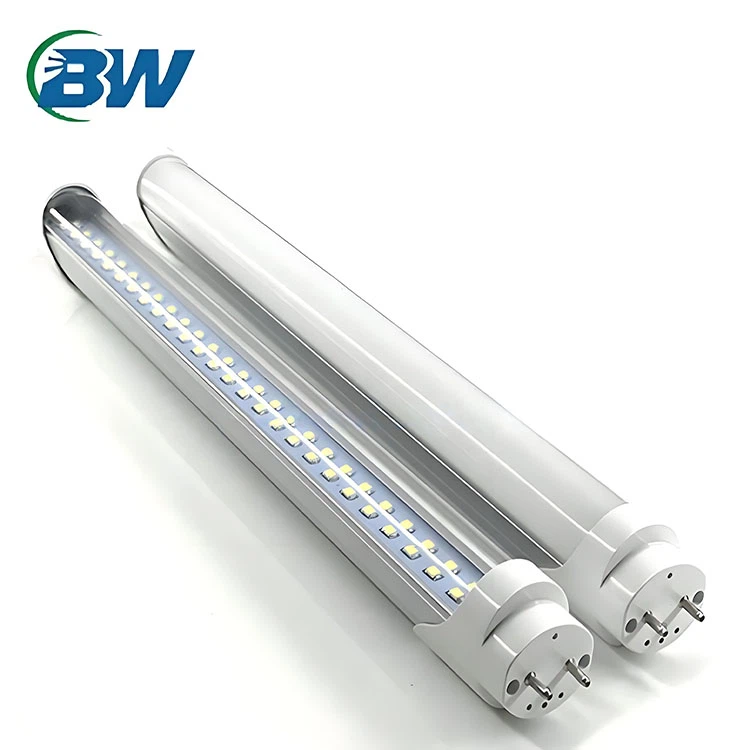
Australia has emergency illumination regulations in place to ensure that people have a secure route to follow in the event of an emergency. Emergency lights in commercial structures must be regularly tested and inspected in Australia. Make sure your system is up to snuff if you run a company out of a structure.

In the past six months of testing, have a few of your emergency and exit lamps malfunctioned on-site? The new LED emergency and escape lights will last 7 to 10 years, compared to the previous tube-style fixtures' lifespan of about 5 years. At least 10% of your worksite lights will malfunction during your six monthly 90-minute evaluations if your lights fail every five years.
Are the emergency and escape lights at your Sydney site broken? All emergency and escape lights must be functional in order to meet Australian Standard AS22931.
Emergency and escape lighting has been installed in accordance with AS2293.1 BCA Clauses E4.2 and E4.4, E4.5, E4.6, and E4.8 to guarantee that Egrees can securely leave the structure in the case of an emergency. When do they plan to begin working? Emergency and escape lights are typically always on when using 240v mains electricity. If there is ever a blackout or conflagration, they have a battery backup that comes on. Building blackouts typically occur during a conflagration when the primary electricity is cut off or shorted.
Considerations for Changing an Emergency Lamp
There are a few things to consider when upgrading escape and emergency illumination in NSW.
All emergency and escape lights in NSW must be completely functional in order to comply with Australian Standard AS2293. This means that any lights that do not pass the required minimum 90-minute charging test or do not produce the required minimum 0.2 lumen brightness for their categorization (location) must be changed with a product that complies with the AS2293 requirements. Failing to do so may result in penalties, denied insurance claims, and, most significantly, harm to renters or other occupants. As a consequence, make sure the replacement component can function in line with AS2293 and is an identical match.
Make Certain You Are Putting a Device for Emergency Illumination That Is Similar
Based on their production and efficiency, all emergency light fixtures are evaluated, rated, and divided into one of five groups (A-E). Two axial categories for fixtures with a single light source are C0 and C90. For instance, the C0: D32 and C90: D32 classifications for the WBS Spotfire SP3LED. Two light source emergency connectors, like the WBS 2x18w 4 foot emergency batten, EM36LED, are frequently categorized as three axes, with C0, C90, and C180 being the most prevalent. The irregular spread of light is to blame for this. For different mounting heights, the maximum distance between emergency light fixtures is determined using the tables (Tables 5.1 to 5.5) in AS2293.1.
The Emergency categorization of a fitting, as well as the maximum distance permitted between various classifications of emergency fittings, as shown in AS2293.1, eventually determine the quantity and placement of exit and emergency fittings required in a structure (Table 5.1 to Table 5.5).
Products from other companies might not fit the required categorization, which is a common occurrence. The building runs the risk of failing to meet the requirements outlined in Sections E4.2 and E4.5 of the Australian Building Code if an existing Exit and Emergency fitting is replaced with one from a different brand without first ensuring that the new installation's classification is equivalent to or greater than that of the pre-existing fitting (BCA).
If a fitting without a comparable categorization, such as an older-style blade exit with inadequate lumen rating [D5], replaces an emergency exit sign (example: EX4LEDQ Quickfit Exit [D16]), an emergency light fitting (example: Sunrise [D32]) needs to be fitted within 2m of the exit sign (AS2293-1 clause 5.4.1).
Another choice is to use a fitment that matches or even surpasses the classification of what is already in place. The individual in control of the repair should check to make sure it does not interfere with the building's illumination design plan.
The most important factor to think about when replacing exit and emergency lighting is making sure your new fitting is an identical match for what is already there. If this isn't done, the fitting won't meet the AS2293 requirements, and the building proprietor will not be in compliance with their legal duty to provide a secure atmosphere for their residents.
Asking someone who knows for sure if you're using the proper substitute for your current Emergency or Exit fitting is the best course of action. Getting expert advice from a certified fire systems installer is always a good option.